“The soil is the great connector of lives, the source and destination of all. It is the healer and restorer and resurrector, by which disease passes into health, age into youth, death into life. Without proper care for it we can have no community, because without proper care for it we can have no life.” ~ Wendell Berry
C: Experts say that good dirt is what ensures healthy plants. So, we put a lot of effort into our making our garden soil rich and nutritious. Like a chocolate zucchini loaf! Ooh, I think it’s time to play an impromptu round of “Would You Rather.” Based on the photo below, would you rather eat a) a salad or b) a slice of chocolate zucchini loaf?
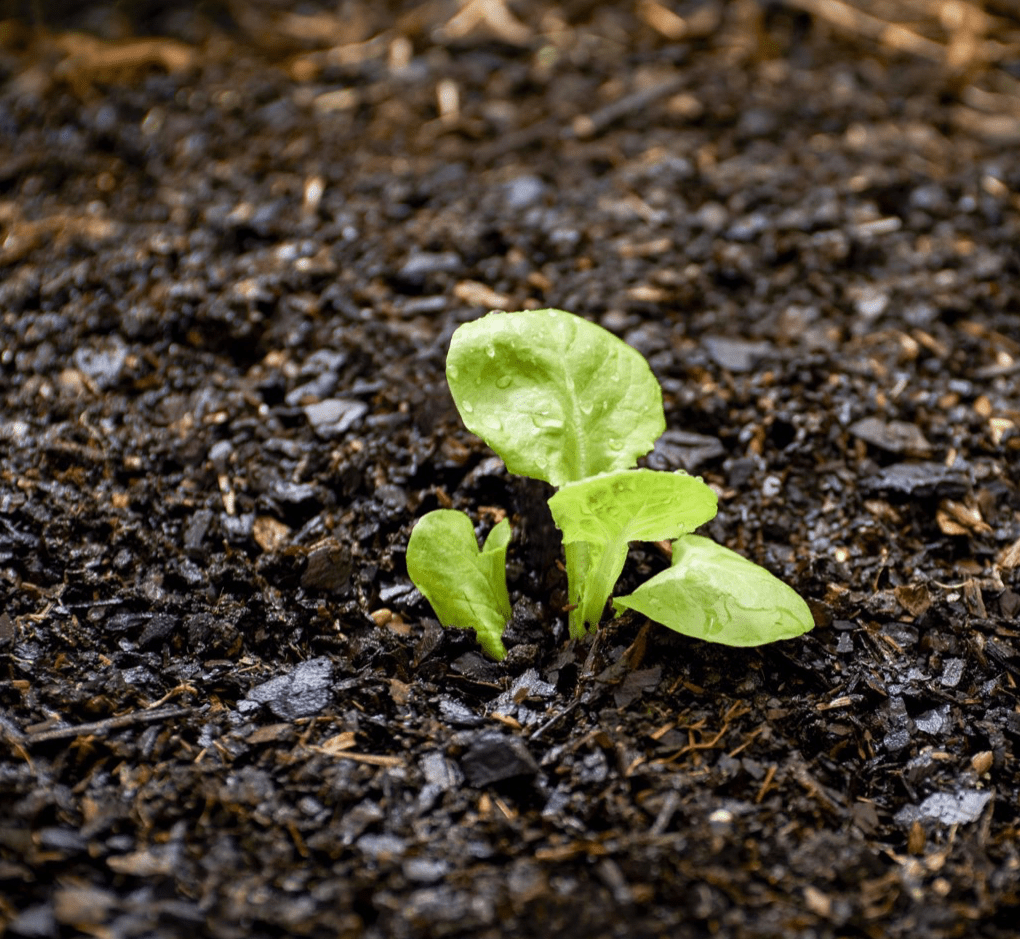
S: If you look with a bit of squint, the dirt does look like it’s flecked with chocolate chips. Mmmm. Chocolate zucchini loaf ranks high for me – almost as high as those chai molasses cookies that I’m still waiting for. Ahem.
C: Two years ago, during Spring Break, my dad and I built our raised garden beds on our deck with lumber generously given to us by Angela’s dad.
S: Angela is a dear friend and is wife to Steve (our featured guest in Part #3, coming soon). We are so lucky to have these friends as neighbours. There’s nothing like growing kids and vegetables together!
C: Once the vegetable beds were made, it was time to fill them up.
S: We could have gone to the store and picked up some bags of dirt. But that would have been lot of dirt to buy. So, we decided to try a more resourceful, and dare we say, a more adventurous method of putting dirt in a raised bed.
C: This is the story of our soil.
It starts at the bottom and builds up in layers. Does this remind you of a pasta dish? This method is actually called lasagne layering! (Hmm, my second reference to food – I think I’m hungry again.) Lasagne layering is a great technique where you layer browns, like dried leaves and newspaper strips, and greens, like grass clippings and kitchen scraps, in a garden bed.
S: During the preceding autumn, we asked the townhouse complex’s landscapers to put aside the fallen leaves for us. This was a moment of unusual foresight. Don’t expect much more of it, at least from me.
C: The leaves would become our brown layers for the garden beds that we were planning to build in the spring. In the meantime, we stuffed all of them into eleven, huge garbage bags. Then these bags of decomposing leaves lived in the fenced corner by our house for half a year. That’s right – eleven garbage bags. For half a year. Our neighbours must have thought we were crazy.
S: And if you’ve read our previous post, Spring Planting #1: Seeds, you know that the space against our townhome also had had a long, ugly beginning. It sat for months under a blanket of newspapers to kill the grass and prep the ground for a drought resistant flower garden.
C: So, when we left a large number of black garbage bags piled out beside that flower garden from fall until the following spring, we really hoped that no one would notice or mind.
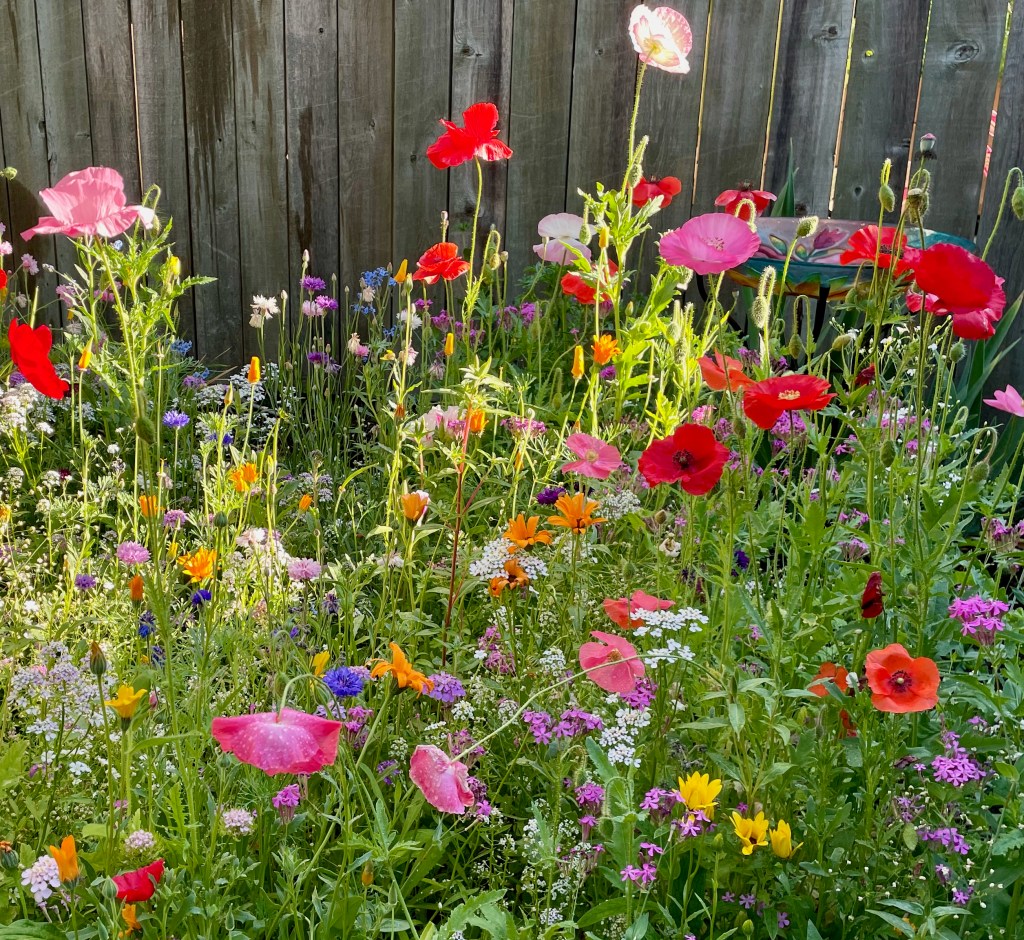
S: Neighbours, if you are reading along, we ask for your forgiveness, and we hope you will accept our offer of blooming colour and beauty. Where the garbage bags once sat is now home to a wildflower pollinator garden.
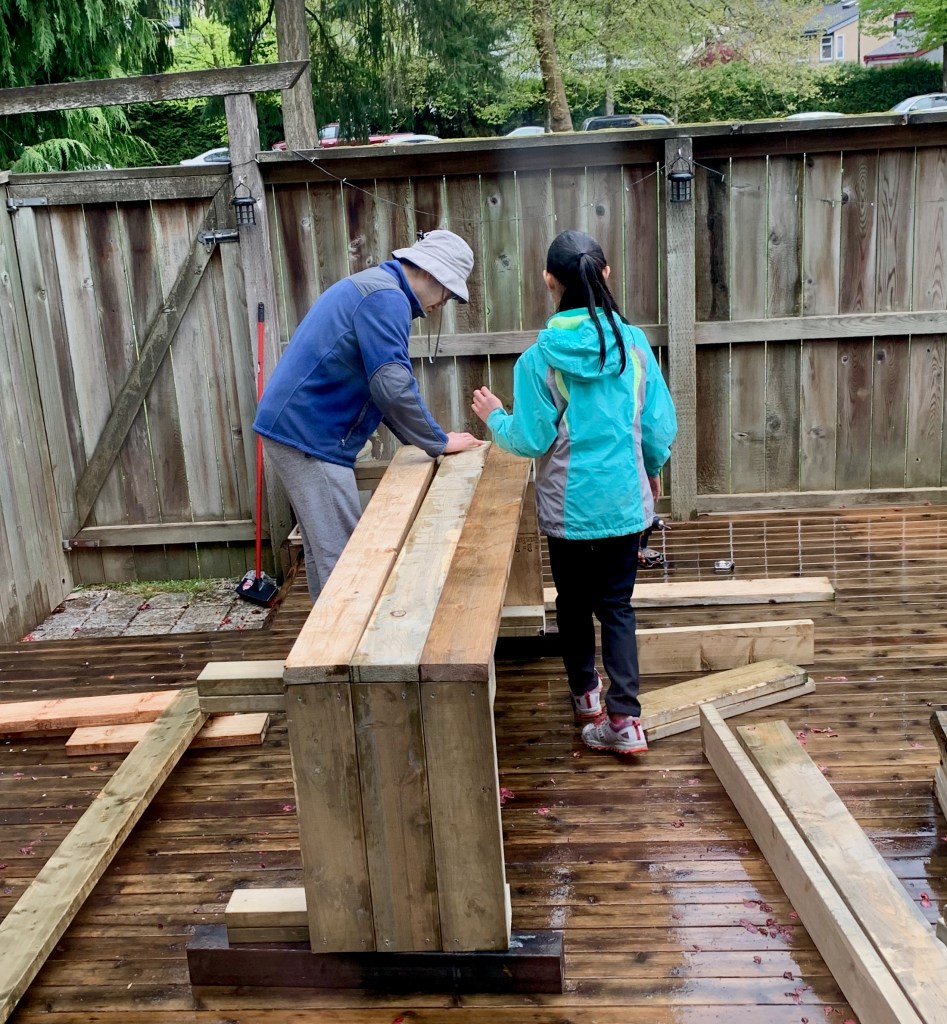
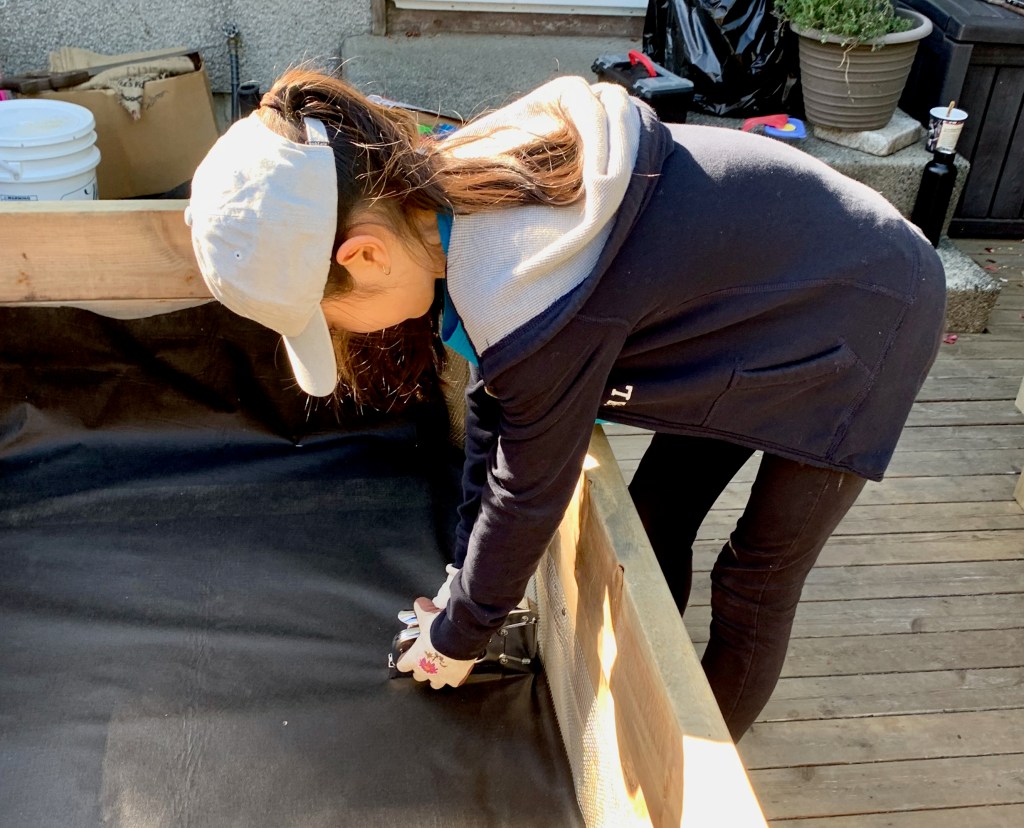
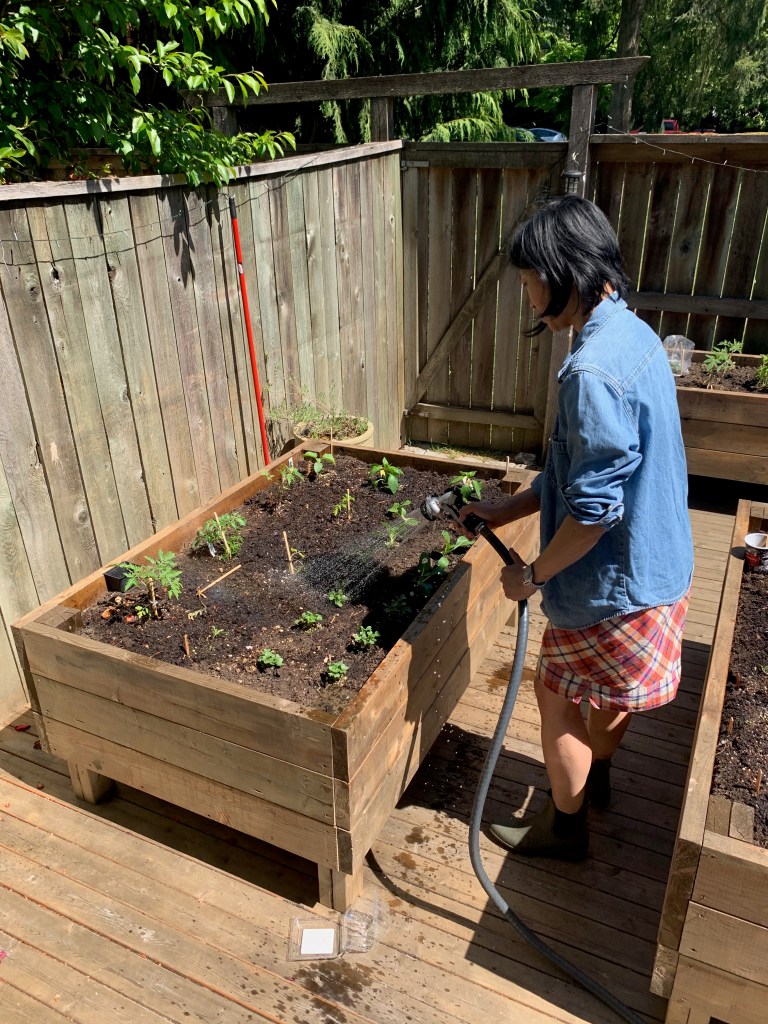
C: Building the vegetable garden beds with my dad was a lot of fun. He got me to sit on 2x4s to weigh the boards down and get them lined up properly before they were screwed in.
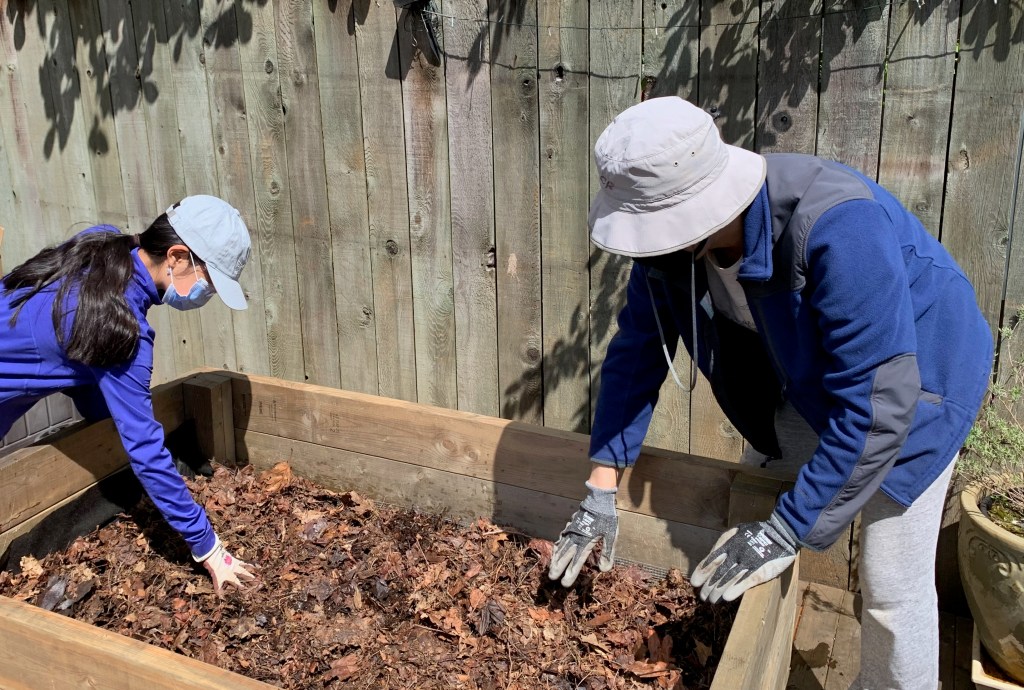
S: Once they were built, we wheelbarrowed those big garbage bags to the deck, and we dumped our first brown layer of leaves into the bottom of the raised garden beds. Were we ever glad to have those medical masks handy!
C: First layer in! It was time to set out to find green matter for the other layers.
S: At this point, we started to get more creative. We drove down to my brother’s back alley and took all the grass clippings from his green bin one day, after he’d mown his lawn. Thanks, Bro!
C: It was good, but it wasn’t enough. We needed more greens. Well, we happen to live beside a park that gets really full of dandelions. The city only mows it a few times a year. I think they forget about it, because it seems more like just a space in between our complex and the school than an actual park.
S: Well, we can’t complain. To many, these dandelions are an eyesore, but to us, they were golden.
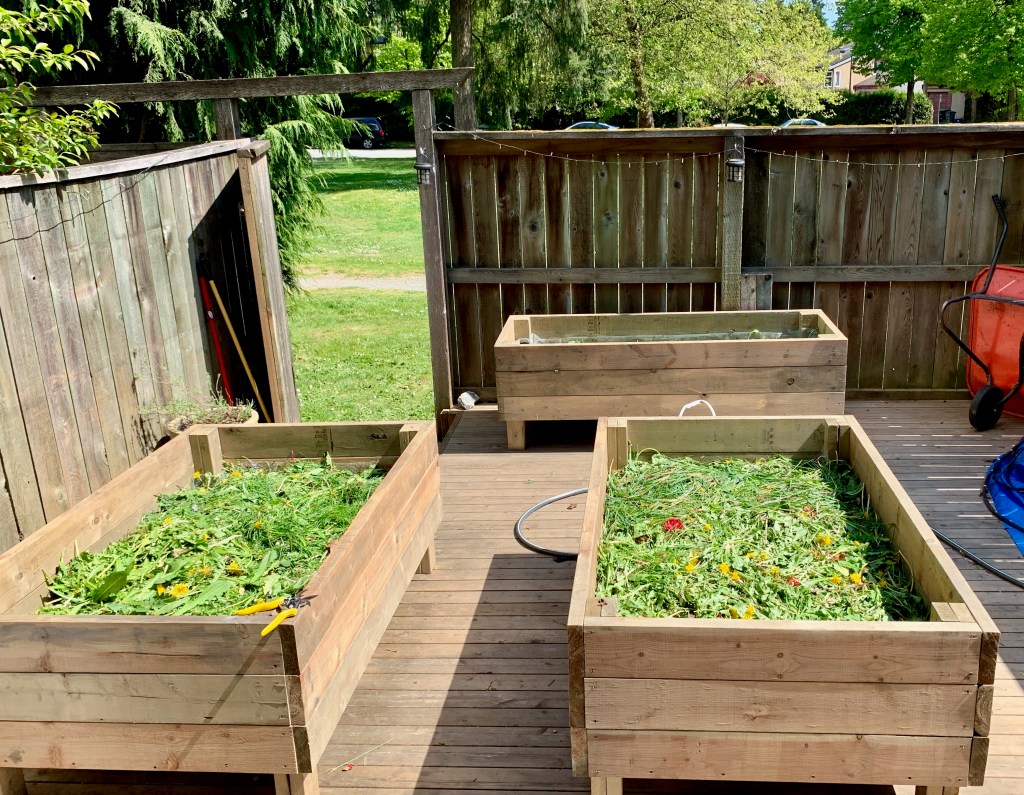
C: It was too early for them to send out seeds, so it was perfect. Our whole family spent a couple of hours weeding and bringing dandelion leaves through the back gate to our garden beds. When all the greens and browns were layered a couple of times, we topped it all off with compost from the city landfill.
S: It was a long, multi-step process, and it wasn’t as easy or convenient, but we are after all, Ordinary Adventurers!
C: So, that’s how we filled our beds, layer by layer.
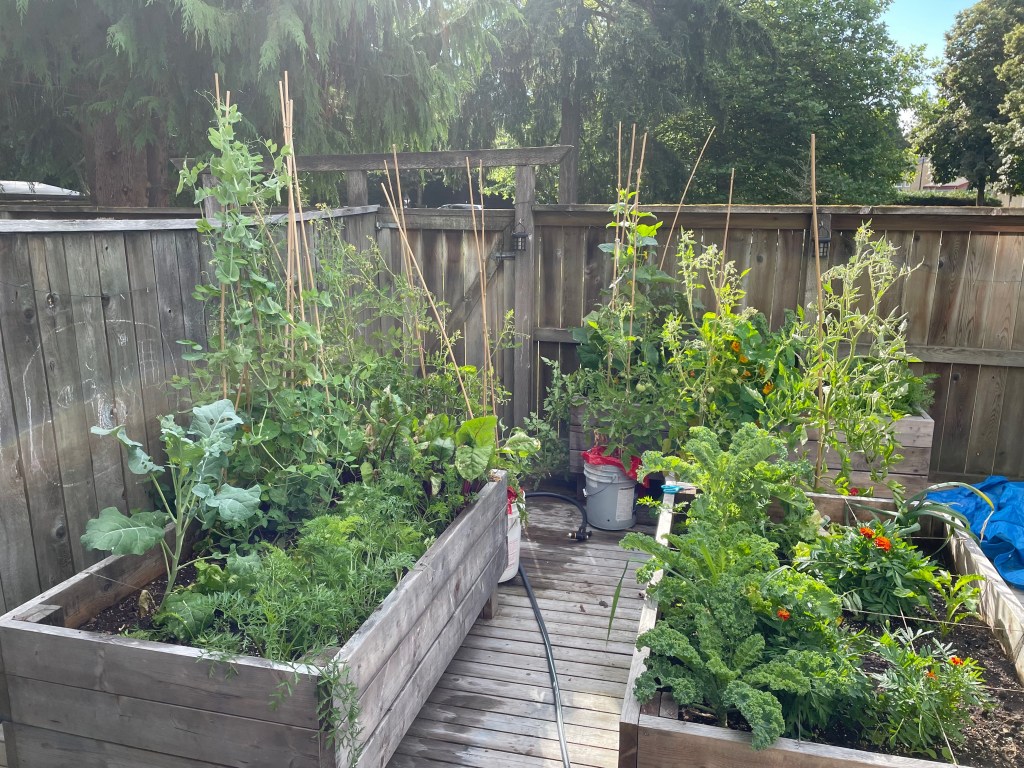
S: Generating our soil has made us look at the world right where we live, and it’s helped us to see the gifts all around us, not in store aisles, but along the corridors of our streets and the pathways of our friendships – free like a field of flowers that some call weeds. Wendell Berry was right. Soil is “a great connector of lives.” At least it has been for us, as we’ve put our soil together with the help of a community of loving friends and living things.
C: Speaking of living things, this year, worms are helping us add something else to the soil mix – worm compost!
S: This past fall, we went to the Vancouver Compost Demonstration Garden, which has a lovely selection of plants, a cobb fireplace, and super friendly staff and volunteers. While we were there, we picked up a little worm compost kit.
C: To get us started with our worms, Angela and Steve (the same amazing friends who got us lumber to build the raised garden beds), gave us handfuls of red wigglers. Next up in our Spring Planting series in Part #3, we interview our local worm composting expert, Steve! Stay tuned…
Signing off with hopes that the story of our soil has connected us with you,
Caseigh & Sandra
S: Bonus: If you are looking to sit down with a good book on the topic of the growing of food in dirt, it is my pleasure to recommend: Pastoral Song: A Farmer’s Journey by James Rebanks. This is a beautifully written book with uniquely perspectival insights from this shepherd/farmer (and advisor to UNESCO) from England’s Lake District. In it, “The New York Times bestselling author of The Shepherd’s Life profiles his family’s farm across three generations, revealing through this intimate lens the profound global transformation of agriculture and of the human relationship to the land.”
 Our Ordinary Adventures
Needs more photos of E and J
LikeLike
Best Uncle! lol. They certainly did help a lot with the garden beds and planting. I’ll see what I can send to you 🙂
LikeLike
It is such a delight to have you share this journey in story. Seeing you walk the journey was a joy and hearing of the fruit produced because of your diligence in cultivating well is an even great joy. I love how you creatively look for opportunities to use the things around you. It demonstrated resourcefulness. Go team Yip!
LikeLike
Sounds like this was a great learning experience! I love that you put in the extra work to source your materials from all over. Thanks for sharing your adventures!
LikeLike